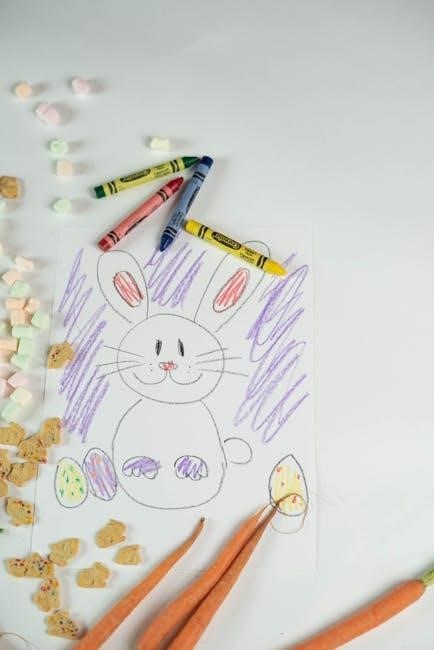
Listen and Draw is a fantastic activity promoting attentive listening and artistic expression, seamlessly blending auditory processing with creative visualization skills.
Utilizing tools like Google Calendar for scheduling, and focusing on clear communication, enhances a child’s ability to follow directions and translate them into art.
This method, supported by Google Workspace, isn’t just about stopping unwanted behaviors; it’s about actively teaching what to do and how to execute it.
Effectively employing Google Kalender for organization allows parents and educators to dedicate focused time to these crucial developmental exercises, fostering both discipline and imagination.

What is Listen and Draw?
Listen and Draw is an engaging educational activity where children listen to a series of verbal instructions and simultaneously create a drawing based on those instructions.
It’s a powerful tool for developing crucial skills, including auditory processing, focused attention, and the ability to translate verbal cues into visual representations. Unlike simply copying a pre-existing image, Listen and Draw requires active listening and interpretation.
The activity often begins with simple instructions – “Draw a circle,” “Add a square below the circle” – gradually increasing in complexity as the child’s skills develop. This process mirrors real-life scenarios where we constantly receive and process verbal information to guide our actions;
Tools like Google Calendar can help schedule dedicated time for these activities, ensuring consistent practice. The core principle, as highlighted in resources about child development, is teaching how to do something, not just stopping an undesired behavior. It’s about building skills through guided practice and positive reinforcement.
Benefits of Listen and Draw Activities
Listen and Draw offers a multitude of developmental benefits for children. Primarily, it significantly enhances auditory processing skills – the ability to understand and interpret spoken language. This is crucial for academic success and effective communication.
Furthermore, the activity strengthens focused attention and concentration, as children must actively listen and maintain mental focus to accurately translate instructions into a visual form. It also fosters spatial reasoning and visualization skills, encouraging children to mentally construct the image before drawing it.
The process builds confidence and self-esteem as children successfully complete the task, demonstrating their ability to follow directions and express their creativity. Like utilizing Google Workspace for collaborative projects, Listen and Draw encourages a structured approach to task completion.
Ultimately, it’s about teaching children how to learn and respond effectively, mirroring the benefits of organized planning with tools like Google Kalender – fostering both discipline and imaginative expression.

Preparing for a Listen and Draw Activity
Successful Listen and Draw requires thoughtful preparation, ensuring a focused environment and readily available materials, much like scheduling with Google Calendar.
Careful planning, similar to Google Workspace organization, maximizes engagement and minimizes distractions, setting the stage for effective learning and creative expression.
Materials Needed
For a successful Listen and Draw activity, gathering the right materials is crucial. Begin with a plentiful supply of plain white paper – various sizes can add interest! Next, ensure you have an assortment of drawing tools: crayons, colored pencils, markers, and even simple pencils are excellent choices.

Consider offering different textures too, like oil pastels or watercolor paints for older children. Erasers are helpful for corrections, and sharpeners are essential for keeping pencils ready. Having a designated workspace, perhaps a table covered with a protective cloth, is also beneficial.
While not strictly required, access to visual aids – like example drawings or images related to the theme – can be helpful, especially for younger participants. Remember, the focus is on listening, so keep materials simple and avoid anything overly distracting. Just like organizing events with Google Calendar, preparation is key!
Setting Up the Environment
Creating a conducive environment is paramount for a successful Listen and Draw session. Minimize distractions by choosing a quiet space, free from excessive noise or visual clutter. Ensure adequate lighting – bright, but not glaring – to allow children to clearly see their work.
Arrange seating so everyone can comfortably hear the instructions and have enough space to draw; Consider a circular arrangement to foster a sense of community and shared focus. Just as Google Workspace facilitates collaboration, a well-organized space encourages participation.
Having materials readily accessible reduces interruptions. A calm and organized atmosphere, similar to the efficiency of Google Calendar scheduling, helps children concentrate on listening and translating instructions into artwork. A positive and encouraging tone sets the stage for creativity and success.

Step-by-Step Instructions for Conducting the Activity

Begin with clear, concise instructions, mirroring the directness of Google Calendar event details. Deliver instructions slowly, allowing time for processing and artistic creation.
Encourage questions and provide gentle guidance, fostering a supportive learning environment, much like Google’s helpful features.
Giving Clear and Concise Instructions
Effective Listen and Draw relies heavily on the clarity of your instructions. Think of it like scheduling an event in Google Calendar – precision is key! Avoid ambiguity; use simple language appropriate for the age group. Instead of saying “Draw a big house,” try “Draw a house with a red roof and two windows.”
Break down complex tasks into smaller, manageable steps. For example, “First, draw a circle. Second, add two triangles on top for the roof.” This mirrors how Google Workspace organizes information for easy access. Each instruction should focus on one specific element at a time.
Avoid unnecessary details that might overwhelm the child. Focus on the essential components of the drawing. Remember, the goal isn’t artistic perfection, but rather the ability to listen attentively and translate auditory information into a visual representation, much like utilizing Google search to find specific results.
Finally, before starting, confirm understanding by asking the child to repeat the first instruction. This ensures they’re on the right track from the beginning.
Pacing the Instructions
The speed at which you deliver instructions is crucial for success. Think of it like managing your schedule with Google Calendar – too fast, and details are missed; too slow, and attention wanes. Begin with a slower pace, especially with younger children, allowing time for processing each step.
Pause briefly between each instruction, giving the child a moment to begin drawing before moving on. This prevents overwhelm and encourages independent work. Avoid rushing through a series of commands, as this mirrors the frustration of a cluttered, disorganized Google search.
As the activity progresses and the child demonstrates understanding, you can gradually increase the pace. Observe their cues – if they seem hesitant or confused, slow down immediately. Like utilizing Google Workspace efficiently, finding the right rhythm is key.
Remember, the goal is not speed, but comprehension and confident execution. Adjust your pacing to match the child’s individual needs and abilities.
Using Descriptive Language
Vivid, detailed language is the cornerstone of a successful Listen and Draw activity. Instead of saying “Draw a circle,” try “Draw a large, sunny yellow circle at the top of your paper.” This encourages visualization and reduces ambiguity, much like a well-defined event in Google Calendar.
Employ adjectives that appeal to the senses – colors, shapes, sizes, and textures. For example, “Draw a tall, wobbly tree with bright green leaves.” Avoid vague terms like “a thing” or “something.” Think of the precision needed when searching information with Google – specificity matters!
Use positional words to guide placement: “above,” “below,” “next to,” “inside,” “outside.” This builds spatial reasoning skills. Just as Google Workspace tools require precise input, so too does this activity benefit from clear direction.
Remember, you are painting a picture with words, enabling the child to recreate it visually. The richer the description, the more engaging and rewarding the experience.

Variations of Listen and Draw Activities
Expand creativity with diverse themes like animals or vehicles, progressing from simple shapes to complex scenes, mirroring Google Calendar’s event variety.
Adapt instructions for different skill levels, fostering engagement and building confidence, similar to Google’s personalized search results.
Simple Shapes and Objects
Beginner-friendly Listen and Draw activities center around basic geometric shapes – circles, squares, triangles, and rectangles. Instructions should be incredibly clear and concise, for example, “Draw a large blue circle in the center of your paper.”
Progress to simple objects: “Draw a red square above the circle,” or “Add a green triangle to the left of the square.” Encourage children to focus intently on each instruction before putting pencil to paper, mirroring the focused attention needed when scheduling events with tools like Google Calendar.
Emphasize color and placement. Vary the complexity slightly by adding positional prepositions: “Draw a small yellow circle underneath the blue circle.” This builds spatial reasoning skills. Remember, like effective communication within Google Workspace, clarity is paramount. Keep it fun and avoid overwhelming the child with too many steps at once.
These foundational exercises build listening comprehension and translate auditory information into visual representation, setting the stage for more complex Listen and Draw challenges.
Complex Scenes and Stories
Elevate the challenge by narrating short scenes or stories, requiring children to draw what they hear. For example, “Draw a sunny beach with a tall palm tree and a little red boat sailing on the blue ocean.” This demands sustained attention and the ability to visualize a complete picture.
Break down the narrative into sequential instructions. “First, draw the horizon line. Next, add the palm tree on the left side. Then, draw the boat…” This mirrors the step-by-step planning facilitated by tools like Google Calendar, where events are scheduled sequentially.
Introduce character interactions: “Draw a girl building a sandcastle, and a dog running towards her.” Encourage detail – what is the girl wearing? What kind of dog is it? Like utilizing Google Workspace for collaborative projects, encourage imaginative additions.
These activities foster narrative comprehension, memory, and artistic interpretation, building upon the foundational skills developed with simpler shapes and objects.
Themed Listen and Draw (Animals, Vehicles, etc;)
Introduce a theme – animals, vehicles, buildings – to provide a focused context for the drawing activity. For instance, “Draw a bright red fire truck with a long ladder and a flashing light.” This narrows the possibilities, aiding concentration.
Themed activities can leverage a child’s existing interests, boosting engagement. If they love dinosaurs, narrate, “Draw a large green Tyrannosaurus Rex with sharp teeth and tiny arms.” This taps into pre-existing knowledge and enthusiasm.
Encourage specific details within the theme. “Draw a blue car with silver wheels and a driver wearing sunglasses.” This promotes precise listening and translation to visual elements, similar to scheduling specific details in Google Calendar.
Themes offer opportunities for learning – discussing animal habitats or vehicle functions – alongside the listening and drawing skills. Like Google’s information access, themes broaden knowledge.

Adapting for Different Age Groups
Adjust complexity based on age; preschoolers need simple instructions, while older children can handle detailed scenes, mirroring Google Calendar’s adaptable scheduling.
Younger children benefit from shorter, repetitive instructions, fostering comprehension, while older kids thrive on multi-step directions, building cognitive skills.
Preschoolers (Ages 3-5)
For this age group, simplicity is key. Instructions should be incredibly short and direct, focusing on one or two steps at a time – think “Draw a circle” or “Add a blue triangle.” Avoid complex descriptive language; instead, use basic shapes and colors. Remember, their attention spans are developing, much like learning to schedule with a tool like Google Calendar – start small!
Visual cues can be helpful alongside verbal instructions. Demonstrate the first step briefly, then let them continue independently. Praise effort over perfection, encouraging experimentation and creativity. Keep the activity brief, around 5-10 minutes, to maintain engagement. The goal isn’t a masterpiece, but to build listening skills and connect auditory input with motor skills. Relate the drawings to familiar objects and experiences, fostering understanding and enjoyment. Like teaching a child what to do, rather than just stopping unwanted behavior, focus on positive guidance.
Themes can be introduced, but keep them broad – “Draw something you see at the park” is better than “Draw a specific red slide.” This allows for individual interpretation and reduces frustration. Remember to celebrate their creations enthusiastically!
Elementary School Children (Ages 6-10)
With this age group, you can introduce more complex instructions, building on their growing attention spans and comprehension skills. Instructions can be longer, incorporating multiple steps and descriptive details – “Draw a tall, green tree with a brown trunk and three red apples.” Encourage them to visualize the scene before they begin, similar to planning events in Google Calendar.
Introduce spatial concepts like “above,” “below,” “next to,” and “behind” to enhance their understanding of positional language. Challenge them with slightly ambiguous instructions to promote critical thinking and problem-solving. For example, “Draw a happy creature” allows for creative interpretation. Pacing is important; deliver instructions at a moderate speed, allowing time for processing.
Themed activities, like drawing animals or vehicles, can be highly engaging. Encourage them to add details and backgrounds to create more elaborate scenes. Focus on both listening accuracy and artistic expression, providing constructive feedback and celebrating their unique creations. Remember, teaching how to do something is crucial.
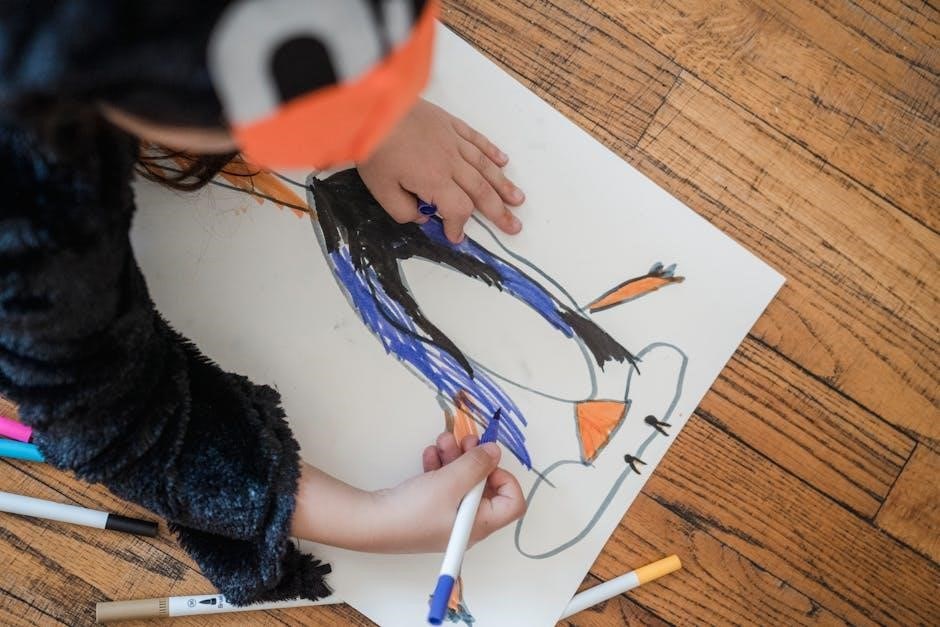
Troubleshooting Common Issues
If children struggle, simplify instructions or offer visual cues. Address difficulty by breaking down tasks and reinforcing positive listening behaviors, ensuring clarity and focus.
Children Not Following Instructions
Addressing this common challenge requires understanding the root cause. Often, it’s not defiance, but difficulty processing auditory information or a lack of understanding. Begin by ensuring instructions are exceptionally clear and concise, avoiding complex sentences or jargon.
Consider the child’s attention span; shorter, more frequent instructions may be more effective. Visual aids, like demonstrating the first step of the drawing, can significantly improve comprehension.
Positive reinforcement is key. Instead of focusing on what wasn’t followed, acknowledge and praise any effort made to listen and attempt the task.
Remember, teaching how to listen is as important as giving instructions. Model attentive listening yourself, and gently guide the child back on track when they become distracted. Utilizing tools for organization, like a Google Calendar schedule for these activities, can establish routine and expectation.
Avoid overwhelming the child with too many steps at once. Break down the drawing into manageable phases, providing feedback after each one.

Difficulty with Specific Instructions
When a child struggles with particular instructions, pinpoint the exact point of confusion. Is it spatial terms (“above,” “below”)? Perhaps it’s shape recognition or understanding descriptive adjectives (“large,” “small”).
Simplify the language used for those specific elements. Instead of “Draw a circle above the square,” try “Draw a circle. Now, put it on top of the square.”
Provide a visual example of the challenging instruction; A quick sketch demonstrating the concept can be incredibly helpful.
Break down complex instructions into smaller, sequential steps. For example, if the instruction is “Draw a house with a chimney,” first focus solely on the house, then the chimney.
Relate the instruction to something familiar. “The chimney is like the one on our house!” Leveraging organizational tools like Google Calendar to schedule focused practice sessions can also build confidence and skill.